Indoor vs. outdoor EV charger wiring: what to consider
Understanding the difference between indoor and outdoor EV charger wiring
When planning an electric vehicle charger installation, one of the first decisions is where the charger will live. Will it be mounted on an interior garage wall, or outside on a driveway or carport? The answer affects everything from the type of enclosure you need to how the wiring is routed and protected. While the core electrical work - running a dedicated circuit from the service panel, sizing the breaker, choosing the right wire gauge - is similar in both cases, the details diverge in important ways. This article walks through the main considerations for indoor versus outdoor EV charger wiring, so you can match the approach to your property and use.
Service panel location and circuit routing
Every EV charger needs a dedicated circuit that starts at the service panel. The distance from the panel to the charger location is a major factor in both cost and complexity. For an indoor installation, the panel is often inside the garage or a nearby utility room, so the wire run stays within the building envelope. That keeps the wiring relatively straightforward: you run cable through attic spaces, along walls, or in conduit inside the garage, with fewer weatherproofing concerns.
Outdoor installations tend to involve longer runs. The panel might be on the opposite side of the house from the driveway, meaning the cable has to travel through exterior walls, under ground, or across a yard. Longer runs mean larger wire gauge to compensate for voltage drop, which increases material cost. The route also needs to be planned carefully to avoid underground utilities, sprinkler lines, or landscaping features. In many cases, the most practical solution is to bury conduit from the house to a pedestal or wall-mounted charger, which adds labor but provides a clean, protected path.
Wiring methods and conduit requirements
Indoor wiring can often use type NM-B cable (commonly called Romex) when the run is inside a garage or finished wall. This cable is less expensive and easier to work with than individual conductors in conduit. However, local electrical codes may require conduit in exposed locations, such as along a garage wall where the cable could be bumped or damaged. A good rule of thumb: if the cable is visible and within reach, protect it with conduit or use an armored cable type.
Outdoor wiring demands a different approach. Direct-burial cable rated for underground use, such as type UF-B, can be placed in a trench without conduit, but it requires a specific burial depth - typically 24 inches for 120-volt circuits and 18 inches for 240-volt circuits, though local code may vary. Many installers prefer to run individual THHN/THWN conductors inside PVC or metal conduit, because conduit provides superior physical protection and makes future wire replacement easier. Conduit also allows a shallower burial depth (as little as 6 inches for PVC under a residential driveway, depending on code). The trade-off is that conduit bends and couplings add labor, and you need to ensure the conduit is sized correctly for the number and gauge of wires.
Weatherproofing and enclosure ratings
An outdoor charger must withstand rain, sun, dust, and temperature swings. The charger itself will have an ingress protection (IP) rating, but the wiring connections at the charger and at any junction boxes also need weatherproof enclosures. Outdoor installations typically use a NEMA 3R or NEMA 4-rated enclosure for the disconnect switch or the wiring compartment. All conduit entries should be sealed with weatherproof fittings, and any unused knockouts must be plugged.
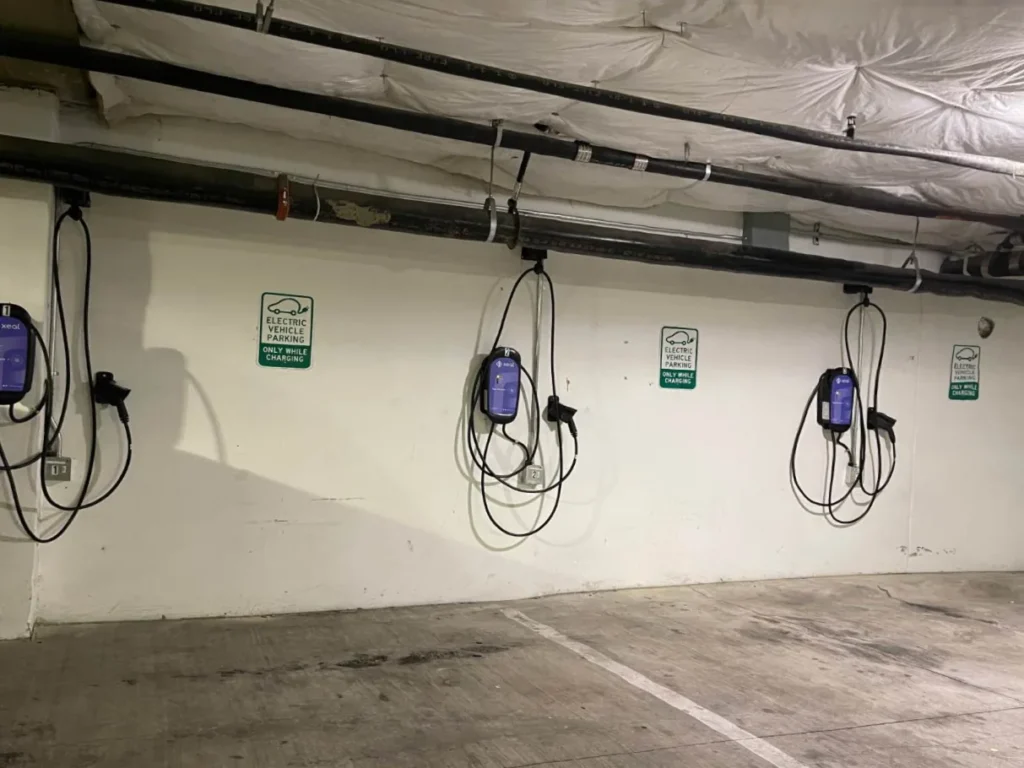
Indoor installations have fewer weather concerns, but moisture can still be an issue in an attached garage, especially in humid climates or if the garage is uninsulated. A NEMA 1 enclosure is usually sufficient, but if the garage is damp or subject to temperature extremes, a NEMA 3R-rated box adds a margin of safety. The main point is that the wiring method and enclosure choice should match the environment, not just the charger's location on the wall.
Load management and continuous load ratings
EV chargers are continuous loads - they can draw maximum current for three hours or more. The National Electrical Code requires that the circuit be sized at 125% of the charger's rated load. For a 40-amp charger, that means a 50-amp breaker and wire rated for at least 50 amps. This rule applies equally indoors and outdoors, but it becomes more relevant when the charger is on a panel that is already near capacity. Load management systems can help by monitoring total house load and adjusting the charger's output to prevent the main breaker from tripping. Whether the charger is inside or outside, the load calculation must account for other large appliances on the same panel.
Outdoor-specific considerations: trenching and pedestals
If the charger will sit on a pedestal in the driveway or parking area, the wiring must come up from below. A common approach is to set a concrete footing or a precast pedestal base, run conduit from the house to that location, and terminate the wires inside a junction box mounted on the pedestal. The pedestal itself should be sturdy enough to withstand a vehicle bump and should place the charger at a comfortable height for plugging in. For a wall-mounted outdoor charger, the wiring typically exits the house through a weatherhead or a conduit stub-up and enters the back of the charger enclosure. In both cases, the cable must be protected from physical damage where it emerges from the ground or the wall.
One practical detail often overlooked: if the outdoor charger is installed near a driveway, consider where the charging cable will lie when not in use. Some chargers have a holster or a hook; others require a separate cable management solution. The wiring for the charger itself is fixed, but the user experience depends on the cable routing and storage. It is worth planning the charger location so the cable reaches the vehicle's charge port without stretching across a walkway or lying on the ground where it could be run over.

Indoor-specific considerations: ventilation and heat
Indoor chargers, especially in a closed garage, generate heat during operation. While modern chargers are efficient, the wiring and connections can still warm up under continuous load. Adequate ventilation around the charger helps dissipate heat and prolongs the life of the electronics. If the charger is mounted in a tight corner or inside a cabinet, airflow may be restricted. Similarly, the wiring should not be bundled tightly with other cables, as heat buildup can degrade insulation over time. These are minor points, but they matter for long-term reliability.
Another indoor consideration is the presence of combustible materials. A garage often stores paint, solvents, gasoline, and other flammables. The charger and its wiring should be installed away from these materials, and the circuit should have a proper ground-fault circuit interrupter (GFCI) breaker if required by code. GFCIs are now mandated for garage outlets and are becoming common for EV charger circuits as well, though local codes vary.
Code compliance and permits
Both indoor and outdoor EV charger installations must comply with local electrical codes and typically require a permit. The permit process ensures that the wiring, breaker sizing, grounding, and bonding meet minimum safety standards. An inspection will verify things like burial depth for outdoor conduit, proper support for indoor cable, and correct torque on connections. While a homeowner can pull a permit and do the work in many jurisdictions, the complexity of routing, load calculations, and code requirements often makes it sensible to hire a licensed electrician. Wooding Electric handles these kinds of installations across the Bay Area, and they emphasize that getting the wiring right from the start prevents issues down the road. A professional can also advise on whether a load management system is needed and can coordinate with the utility if a service upgrade is required.
Choosing between indoor and outdoor: when each suits
An indoor installation is usually the simpler and less expensive option if you have a garage with available wall space near the service panel. It avoids the extra cost of trenching, weatherproof enclosures, and longer wire runs. It also keeps the charger out of the elements, which can extend its lifespan. However, if you park outside or have a detached garage, an outdoor installation is the only practical choice. For multi-unit dwellings or commercial properties, outdoor chargers in parking lots or carports are common, and they require robust weatherproofing and often a more complex distribution setup.
The decision also depends on the property's existing electrical infrastructure. If the panel is already full or located far from the parking area, an outdoor charger with a dedicated sub-panel and conduit run may actually be easier than trying to snake cable through finished interior walls. In those cases, the extra upfront cost of outdoor wiring is offset by a cleaner installation and less disruption to the living space.

Final practical points
Regardless of where the charger goes, the wiring must be sized for the charger's amperage and the length of the run. Voltage drop over long distances can cause the charger to underperform or even fail to start. For runs over 100 feet, stepping up one wire gauge size is a common practice. The breaker must match the wire rating, and all connections should be torqued to the manufacturer's specification - loose connections are a leading cause of heat-related failures in EV charger circuits.
If you are planning a charger installation and are unsure about the best wiring approach for your property, consulting a qualified electrician is a wise step. Wooding Electric serves homeowners and businesses in San Jose and the surrounding Bay Area, helping them navigate the choices between indoor and outdoor setups, code requirements, and load management. Taking the time to plan the wiring properly means your charger will work reliably for years, whether it is mounted in a dry garage or standing up to the weather outside.